If you live in Phoenix, you already know—your backyard takes a beating. With summer temperatures regularly hitting 110°F+, not all artificial grass is built to survive the heat.
So what actually lasts in Arizona?
This guide breaks down the best artificial grass options for extreme heat, what features matter most, and how to choose turf that won’t fade, melt, or fail.
What Makes Artificial Grass “Heat Resistant”?
Not all turf is created equal. In Arizona, heat resistance comes down to a few key factors:
UV Protection
High-quality artificial grass includes UV inhibitors that prevent fading, drying, and cracking under constant sun exposure.
Material Type
Polyethylene turf is the most common for residential use because it stays softer and handles heat better than cheaper materials like polypropylene.
Blade Structure
Thicker, well-structured blades maintain shape and airflow, helping reduce heat retention.
Infill Type
Special infills like silica sand or cooling infill can significantly lower surface temperatures.
What Type of Artificial Grass Works Best in Arizona?
For Phoenix homeowners, the best turf typically includes:
- Polyethylene fibers for durability and comfort
- High face weight (60–80 oz+) for longevity
- Double backing for stability in extreme weather
- Built-in UV resistance to prevent fading
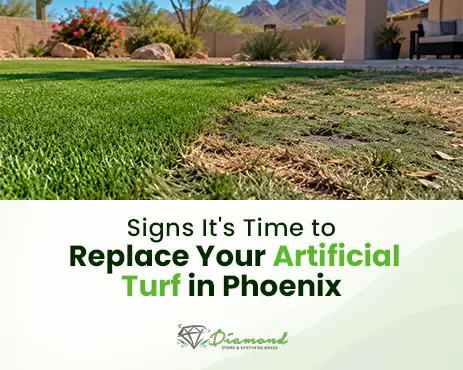
Lower-end turf might look good at first—but under Arizona sun, it can flatten, discolor, and wear out much faster.
Does Artificial Grass Get Too Hot?
Yes, artificial grass can get hot—but there are ways to manage it.
In direct sunlight, turf can reach temperatures higher than natural grass. However, professional installation and the right materials make a big difference.
How to Keep Artificial Grass Cooler
- Use cooling infill to reduce heat retention
- Install light-colored turf fibers
- Add shade elements like pergolas or patio covers
- Rinse the turf with water during peak heat
When done right, artificial grass remains comfortable and usable—even during Arizona summers.
How Long Does Artificial Grass Last in Arizona Heat?
With proper installation and quality materials, artificial turf can last:
15–20 years in Arizona climates
The biggest factors that impact lifespan:
- Quality of turf materials
- Installation method
- Level of foot traffic
- Sun exposure
Cheap turf may only last 5–8 years, making it a costly mistake long-term.
Common Mistakes to Avoid
Many homeowners run into issues because they choose based on price instead of performance.
Here are the most common mistakes:
- Choosing low-quality turf without UV protection
- Skipping professional installation
- Using the wrong infill
- Not preparing the base properly
In Arizona, these shortcuts almost always lead to early replacement.
Is Artificial Grass Worth It in Extreme Heat?
For most homeowners in Phoenix—the answer is yes.
Artificial grass eliminates:
- Constant watering
- Dead patches from heat
- Mud, pests, and maintenance headaches
And when installed correctly, it holds up against the harshest Arizona conditions.
Final Thoughts: Choosing the Right Turf for Arizona
If you want artificial grass that actually lasts in 110° weather, focus on quality over cost.
The right turf will:
- Stay green year-round
- Resist fading and damage
- Keep your yard usable—even in summer
If you’re considering artificial grass in Phoenix, working with an experienced installer ensures you get materials designed specifically for desert climates—and results that last.